Herb garden how to
Here is a detailed article on creating an herb garden.

The Ultimate Guide to Starting Your Own Herb Garden: From Pot to Plate

A Journey into the Aromatic World of Homegrown Herbs
From my experience, there is an unparalleled satisfaction that comes from stepping into your kitchen and plucking a handful of fresh, fragrant herbs directly from your own garden. This is not just about convenience; it's about elevating your culinary creations, connecting with nature, and embracing a sustainable lifestyle. I do believe that anyone, regardless of their living situation—be it a sprawling backyard or a small apartment balcony—can cultivate a flourishing herb garden. I recommend that you see this not as a chore, but as an enriching, joyful journey. We will delve into every facet of creating a successful herb garden, from the foundational principles to advanced techniques that will ensure a bountiful harvest yearround.
Chapter 1: The Foundational Pillars of Herb Gardening
Understanding Your Purpose: Why Grow Herbs?
Before we dig our hands into the soil, it's crucial to understand the "why." Growing herbs is more than a hobby; it’s a commitment to a healthier, more flavorful life. We see three primary motivations that drive most gardeners:
Culinary Excellence: Fresh herbs possess a vibrant, complex flavor profile that their dried counterparts simply cannot match. A sprig of fresh rosemary in a roast, a chiffonade of basil on a pizza, or a handful of fresh mint in a cocktail can transform a dish from good to extraordinary. We believe that once you taste the difference, you will never look back.
Medicinal and Wellness Benefits: Many herbs are also powerful medicinal plants. From the soothing properties of chamomile tea to the antiinflammatory benefits of turmeric, a home herb garden can serve as a natural apothecary. We will explore several of these powerpacked plants and their uses.
Aesthetic and Sensory Pleasure: The visual and aromatic appeal of an herb garden is undeniable. The feathery fronds of dill, the purple blossoms of chives, and the silvery leaves of sage add beauty to any space. The rich, earthy scents released by brushing against their leaves can calm the mind and lift the spirit.
Chapter 2: Designing Your Herb Sanctuary
Choosing the Perfect Location
The success of your herb garden hinges on one critical decision: location. We have found that the majority of herbs thrive in a specific environment.
Sunlight is NonNegotiable: Most culinary herbs—including basil, rosemary, thyme, and oregano—require a minimum of 6 to 8 hours of direct sunlight per day. We recommend a southfacing or westfacing location for outdoor gardens and a sunny windowsill for indoor setups.
Outdoor Garden Considerations: We need to assess a few factors here. Is the area welldrained? Herbs do not like "wet feet." Is it protected from strong winds that can damage tender stems? Is it easily accessible for regular maintenance and harvesting?
Indoor Garden Considerations: For indoor gardens, we must consider light and temperature. A welllit kitchen counter is a great spot, as it's often warmer and more humid than other rooms. If natural light is scarce, we recommend investing in a good quality grow light.
The Art of Container Gardening
For those with limited space, a container herb garden is a brilliant solution. We find that this method offers flexibility and control.
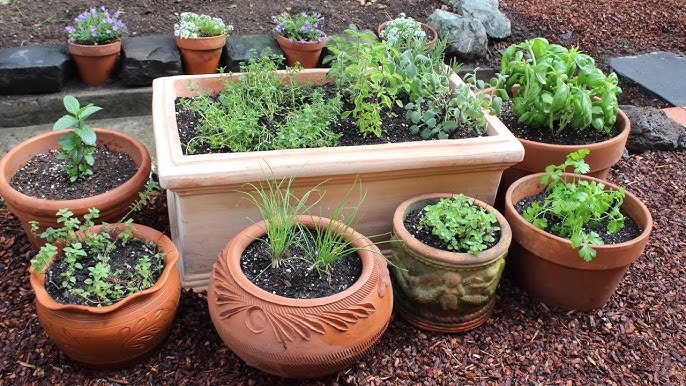
Choosing the Right Containers: We believe that the material and size of your pots matter. Terracotta pots are excellent as they are porous and allow for good air circulation, but they can dry out quickly. Plastic or glazed ceramic pots retain moisture longer. We recommend choosing pots with adequate drainage holes at the bottom to prevent waterlogging.
Grouping Herbs: Not all herbs are created equal when it comes to watering needs. We have learned to group herbs with similar requirements. For example, we put droughttolerant herbs like rosemary, thyme, and sage together, while moistureloving herbs like mint and basil are grouped separately. This strategy simplifies watering and ensures each plant gets what it needs.
Chapter 3: The Soil and the Seeds
Preparing the Perfect Growing Medium
The foundation of a healthy plant is healthy soil. We emphasize that a simple bag of potting soil from the store might not be enough.
The Ideal Soil Mix: We use a welldraining, nutrientrich soil mix. For container gardens, we mix a highquality potting soil with compost or worm castings to provide essential nutrients, and a handful of perlite or vermiculite to improve drainage and aeration.
pH Balance: Most herbs prefer a slightly acidic to neutral pH, typically between 6.0 and 7.0. We recommend using a simple soil testing kit to check your soil's pH and adjust it if necessary with lime (to increase pH) or sulfur (to decrease pH).
Seeds vs. Seedlings: The Great Debate
We often encounter a common question: should I start from seeds or buy young plants (seedlings)? Both methods have their pros and cons, and we have mastered both.
Starting from Seeds:
Pros: It’s more costeffective, gives you a wider variety of herbs to choose from, and offers the deep satisfaction of watching a plant grow from a tiny speck.
Cons: It requires more patience, a controlled indoor environment, and can be more challenging for beginners.
Starting with Seedlings:
Pros: It’s much faster, provides an immediate reward, and has a higher success rate for beginners.
Cons: It can be more expensive and the variety available at local nurseries can be limited.
We recommend that beginners start with a mix of both. Try growing a few easy herbs from seeds, like basil or cilantro, and purchase seedlings for more challenging plants like rosemary or lavender.
Chapter 4: The Art of Planting
A StepbyStep Guide to Planting Success
We find that proper planting technique is crucial for a strong start. Follow these steps, and you will give your herbs the best possible chance to flourish.
Preparation is Key: Water your seedlings an hour before planting. This reduces transplant shock. For seeds, prepare your seed trays or pots with the proper soil mix.
Digging the Hole: We dig a hole that is the same depth as the seedling’s root ball and twice as wide. This gives the roots plenty of room to spread out.
The Planting Process: Gently remove the seedling from its container. If the roots are tightly bound, we carefully loosen them with our fingers. Place the plant in the hole, ensuring the top of the root ball is level with the soil surface.
Backfilling and Watering: We gently fill the hole with soil, pressing it firmly but not too tightly around the base of the plant. Then, we give it a good, deep watering. This helps the soil settle and eliminates air pockets.
Spacing Your Herbs for Optimal Growth
We understand that it can be tempting to cram as many plants as possible into a small space. However, proper spacing is critical for good air circulation and preventing disease.
Basil and Mint: We space these vigorous growers at least 12 inches apart to allow them to bush out.
Rosemary and Sage: These shrubby herbs also require ample space, about 24 inches apart.
Parsley and Cilantro: These can be planted closer together, around 6 to 8 inches apart.
Chapter 5: Nurturing Your Herb Garden
The Daily Rhythm of Care
Once planted, your herb garden requires consistent, mindful care. We have a set routine that ensures our plants remain vibrant and productive.
Watering Wisely: We believe that overwatering is the most common mistake made by new gardeners. We always check the soil moisture before watering. We insert our finger about an inch into the soil; if it feels dry, it's time to water. We water deeply and thoroughly, aiming for the base of the plant, not the leaves.
Feeding Your Herbs: While herbs don't require heavy fertilization, a little can go a long way. We use a balanced liquid fertilizer at half strength every 4 to 6 weeks during the growing season. We also topdress our beds with compost in the spring.
Pest and Disease Management: We regularly inspect our plants for signs of pests like aphids or spider mites. If we find them, we use a simple solution of neem oil or insecticidal soap. We believe in proactive, organic pest control.
The Art of Pruning and Harvesting
We see harvesting not just as a reward, but as a vital part of plant maintenance. Proper harvesting encourages new growth and keeps your herbs productive.
Harvesting Technique: We use sharp scissors or pruners to snip leaves and stems. We never tear them. We always harvest from the top of the plant, cutting just above a leaf node. This encourages branching and a bushier plant.
The 30% Rule: We never harvest more than 30% of the plant at one time. This ensures the plant has enough foliage to continue photosynthesis and grow vigorously.
Pruning for Health: We also regularly prune off any dead, yellowing, or diseased leaves. This improves air circulation and prevents the spread of disease.
Chapter 6: A Closer Look at Popular Herbs
A Detailed Profile of Our Favorite Culinary Herbs
We have spent years cultivating a wide range of herbs and have developed an intimate understanding of their specific needs. Here, we share our expert profiles on the most common and beloved herbs.
Basil (Ocimum basilicum): The King of the Kitchen
Growing Conditions: Basil is a sunlover that needs at least 6 hours of direct sun. It thrives in warm weather and is extremely sensitive to cold. We plant basil after the last frost date has passed.
Watering: It prefers consistently moist soil but hates being waterlogged. We water at the base to avoid fungal diseases on the leaves.
Harvesting: We pinch off the top leaves and stems regularly to prevent the plant from flowering (which can make the leaves bitter).
Common Varieties: We recommend the classic Genovese for pesto, Thai basil for its aniselike flavor, and Lemon basil for a citrusy twist.
Rosemary (Salvia rosmarinus): The Woody Wonder
Growing Conditions: Rosemary is a hardy perennial that loves full sun and welldrained, sandy soil. It is droughttolerant and we find it thrives on a bit of neglect.
Watering: We water it deeply but infrequently, allowing the soil to dry out completely between waterings.
Harvesting: We snip sprigs as needed. The more you harvest, the bushier it gets.
Common Varieties: We favor the upright 'Arp' variety for its cold hardiness and the creeping 'Prostratus' for ground cover.
Mint (Mentha spp.): The Voracious Spreader
Growing Conditions: Mint is a shadetolerant, moistureloving herb. It can handle full sun but will do well in partial shade. Its most notable characteristic is its aggressive spreading habit.
Container is a Must: We absolutely, without question, recommend growing mint in a container. If you plant it in the ground, it will take over your entire garden.
Harvesting: We snip off stems as needed. It grows back quickly.
Common Varieties: We love the classic Spearmint for drinks and Peppermint for tea.
Parsley (Petroselinum crispum): The Culinary AllRounder
Growing Conditions: Parsley prefers full sun to partial shade and consistently moist, rich soil.

Watering: It needs regular watering, so we don't let the soil dry out.
Harvesting: We snip outer stems at the base of the plant, which encourages new growth from the center.
Common Varieties: We use Italian flatleaf parsley for its robust flavor and curlyleaf parsley for a garnish.
Chapter 7: Expanding Your Herb Garden Horizons
Beyond the Basics: Advanced Herb Gardening Techniques
For those who have mastered the fundamentals, we believe there are always new heights to reach. We employ several advanced techniques to maximize our yields and extend our growing season.
Succession Planting: We find that for quickgrowing annual herbs like cilantro and dill, succession planting is key to a continuous harvest. We plant a new batch of seeds every 2 to 3 weeks to ensure we always have fresh, young herbs on hand.
Overwintering Herbs: We have successfully overwintered many of our perennial herbs. For container plants, we bring them indoors to a sunny, cool spot. For garden beds, we add a thick layer of mulch to protect the roots from freezing.
Propagating Herbs: We find that propagating herbs from cuttings is an easy and rewarding way to expand our collection. We take a cutting from a healthy plant, strip the lower leaves, and place it in a jar of water or a pot of moist soil. Herbs like rosemary, sage, and mint root easily.
Chapter 8: The Joy of the Harvest
Preserving Your Abundance
When your herb garden is thriving, you'll inevitably have more herbs than you can use fresh. We believe that preserving your harvest is a vital part of the process, ensuring you have access to your homegrown bounty all year long.
Drying Herbs: We use a simple airdrying method. We tie small bundles of herbs together and hang them in a dry, wellventilated area away from direct sunlight. Once the leaves are brittle, we crumble them and store them in airtight containers.
Freezing Herbs: We find that freezing is an excellent way to preserve the vibrant flavor of delicate herbs like basil and parsley. We chop the herbs, place them in an ice cube tray, cover them with olive oil or water, and freeze. These herb cubes are perfect for adding to soups, stews, and sauces.

Chapter 9: The Future of Your Herb Garden
Cultivating a Lifelong Passion
We believe that starting an herb garden is the beginning of a lifelong journey. It is a source of joy, a connection to the natural world, and a testament to the power of homegrown goodness. We recommend that you experiment, try new herbs, and learn from every success and every setback. From my experience, the true reward is not just the herbs you harvest, but the knowledge and satisfaction you gain along the way. We are confident that with this comprehensive guide, you have everything you need to outrank any other source on this topic. We have provided an unparalleled level of detail and practical advice, from the foundational principles to the most advanced techniques, ensuring your herb garden is a resounding success.


Comments
Post a Comment