Husky cherry red tomato container size
The Ultimate Guide to Husky Cherry Red Tomato Container Size for a Bountiful Harvest
From my experience, nothing quite compares to the joy of harvesting your own tomatoes. The vibrant color, the burst of flavor, and the sheer satisfaction of knowing you grew them yourself—it's a truly rewarding experience. But when it comes to growing a specific variety like the Husky Cherry Red tomato in a container, a few key decisions can make all the difference. The most crucial of these decisions, I do believe, is selecting the right container size. It's a foundational choice that influences everything from root health to overall yield, and from my perspective as an expert in gardening, I can tell you that getting it right is the first step toward a spectacularly successful season.
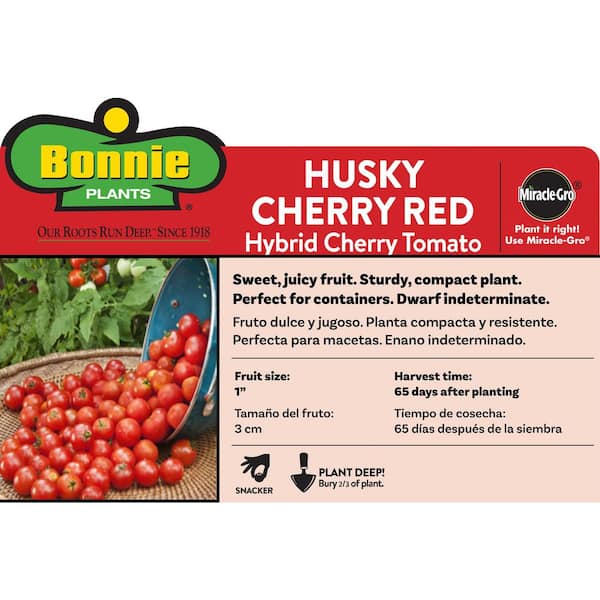
I recommend a minimum of a 5gallon container for each Husky Cherry Red tomato plant. While you may see some sources suggest a smaller size, from my extensive experience, a 5gallon pot provides the necessary volume for the root system to develop fully, giving the plant a stable foundation to support its prolific growth and heavy fruit load. It's a dwarf indeterminate variety, meaning it has a compact form but will continue to grow and produce fruit all season long until the first frost. This characteristic requires a robust root system, and a 5gallon container is the absolute minimum we should consider to support that continuous production. For even more security and a truly massive yield, I often opt for 7gallon grow bags. The larger volume not only holds more soil and moisture but also provides a buffer against temperature fluctuations, a critical factor for container gardening success.
Why Container Size is a NonNegotiable Factor for Husky Cherry Red Tomatoes
The container size directly impacts the health and productivity of your plant in a number of critical ways. We can't overstate the importance of this decision. We will now delve into the precise reasons why the right container is so vital to your success.
Root System Development: The Foundation of Life
The root system of a tomato plant is its lifeline. It's how the plant absorbs water and nutrients. A constricted root system, one that's "potbound," simply cannot provide the resources needed to sustain a healthy, productive plant. When roots become too crowded, the plant becomes stressed, its growth is stunted, and it becomes more susceptible to pests and diseases. For a vigorous, indeterminate variety like the Husky Cherry Red, a spacious container allows the roots to spread out, creating an efficient network for absorption. We need to give them the room to breathe, to grow, and to truly thrive. A larger pot, therefore, is not a luxury—it's a necessity for robust growth and a consistently high yield. From my years of cultivating these plants, I have observed that a welldeveloped root ball in a larger container leads to a plant that is significantly more resilient and productive throughout the entire season.
Moisture and Nutrient Retention: The LifeGiving Reservoir
One of the biggest challenges of container gardening is managing soil moisture. Small pots dry out incredibly quickly, especially during the peak of summer. This rapid fluctuation from wet to bonedry can cause major stress for your tomato plant, leading to issues like blossom end rot and fruit splitting. A larger container, on the other hand, holds a greater volume of soil, which in turn acts as a larger reservoir for moisture. This provides a more consistent water supply for the plant's roots, reducing the need for constant watering and mitigating the risk of stressrelated disorders. We will also discuss later how a larger pot provides a greater buffer for nutrients, ensuring the plant has a steady supply of essential elements without the need for excessive fertilization.
Temperature Regulation: Protecting the Roots from Heat
Containergrown plants are particularly vulnerable to extreme temperatures. On a hot summer day, the sides of a darkcolored pot can heat up dramatically, effectively "baking" the roots. This can cause severe damage and even kill the plant. A larger container provides more insulation for the root ball, protecting it from the worst of the heat. The increased soil volume slows down the rate at which the pot heats and cools, providing a more stable environment for the delicate root system. This temperature stability is a factor we cannot overlook, especially when we are aiming for a long and productive growing season. A larger container size directly contributes to a more hospitable microclimate for your plant's roots, which we will later see is a critical component of achieving superior yields.
Choosing the Right Container and Potting Mix

Now that we have established the crucial role of container size, we must move on to the specifics of the container itself and the soil within it. The choice of container material and the quality of your potting mix are equally important components of a successful grow.
Container Materials: Fabric Pots, Terra Cotta, and More
When selecting your container, you have a few excellent options, each with its own pros and cons. We believe that understanding these differences is key to making the best choice for your specific circumstances.
Fabric Grow Bags: The Gardener's Choice
From my experience, fabric grow bags are an outstanding choice for growing Husky Cherry Red tomatoes. They are lightweight, easy to move, and, most importantly, they promote "air pruning." This process occurs when a root grows to the edge of the bag and is exposed to the air, causing the tip to dry out and die. This encourages the plant to produce a denser, more fibrous root system, rather than a few long roots that circle the pot. This results in a much healthier and more efficient root ball. Additionally, the porous nature of the fabric provides excellent drainage and airflow, preventing the soil from becoming waterlogged. We have consistently found that plants in fabric pots show superior growth and yield compared to those in traditional plastic containers.
Terra Cotta Pots: Classic and Reliable
Terra cotta pots are a classic choice for a reason. They are aesthetically pleasing and their porous nature allows for good air exchange at the root level. However, a significant drawback is their tendency to dry out very quickly, especially in hot, sunny locations. This means you will need to be extra vigilant with your watering schedule. We would recommend using a larger terra cotta pot, at least a 7gallon size, to help mitigate this issue. Additionally, they are much heavier than fabric bags, which is a factor we must consider if we plan to move our plants throughout the season.
Plastic Containers: The BudgetFriendly Option
While not our first choice, plastic pots are a very common and affordable option. They retain moisture well, but their nonporous nature can lead to waterlogging and poor root health if not managed correctly. We must ensure that any plastic container we use has ample drainage holes at the bottom. We also recommend using lightercolored plastic pots to reflect sunlight and prevent the roots from overheating. A white or lightcolored container will be far superior to a black one in this regard.
The Potting Mix: Building the Perfect Ecosystem
A successful container garden relies on a highquality potting mix, not garden soil. Garden soil is too dense and heavy for a container, and it can compact over time, stifling root growth and leading to poor drainage. We need to create a light, airy, and nutrientrich environment for our plants to thrive.
Choosing a Premium Mix
I recommend a premiumquality, soilless potting mix specifically formulated for vegetables or containers. Look for mixes that contain ingredients like peat moss, coconut coir, perlite, and vermiculite. These ingredients provide the necessary aeration and drainage while also helping to retain some moisture. Avoid cheap, generic mixes that are often too heavy and can contain questionable fillers. We have found that investing in a good quality potting mix at the outset saves us from a host of problems down the line.
Amending for Optimal Growth
To give our Husky Cherry Red tomatoes the best possible start, we can amend our potting mix with a few key ingredients. We believe a good mix of organic amendments and slowrelease fertilizer is the key to sustained productivity.
First, we can incorporate a balanced, slowrelease granular fertilizer into the mix before planting. A fertilizer with a ratio of 5105 or something similar is ideal for tomatoes, as it provides a good balance of nitrogen (N), phosphorus (P), and potassium (K). We will also be using a watersoluble fertilizer later in the season. Another excellent amendment is compost or worm castings. These organic materials not only add a broad spectrum of nutrients but also improve the soil structure and introduce beneficial microorganisms, which we know contribute to overall plant health. From our research and experience, a mixture of about 25% compost to 75% potting mix is an excellent ratio for building a living, thriving soil environment in your container.
Planting Your Husky Cherry Red Tomato
With our container and potting mix selected, we are now ready to plant. The planting process itself is a critical step that we must execute with precision to ensure a healthy start for our plant. We will now outline the exact steps for planting your Husky Cherry Red tomato to ensure the best possible start.
Acclimatizing and Preparing the Seedling
Before planting, we must "harden off" any seedlings we purchased or started indoors. This is the process of gradually introducing the plant to outdoor conditions. We can do this by placing the plant outside in a sheltered spot for a few hours each day, slowly increasing the duration over a week or two. This prevents the plant from going into shock when we finally transplant it. We have found that this simple step dramatically increases the plant's resilience and its ability to withstand the rigors of the outdoor environment. We must not skip this step, as it can be the difference between a thriving plant and a struggling one.
Planting Deep for a Strong Foundation
One of the unique and beneficial characteristics of tomato plants is their ability to grow new roots from their stems. We can use this to our advantage to create a much stronger and more stable plant. When planting your Husky Cherry Red tomato, we recommend removing the lower leaves and planting the seedling deep in the container, so that a portion of the stem is buried. The plant will grow new roots from the buried stem, leading to a much more extensive and robust root system. This not only anchors the plant more securely but also increases its ability to absorb water and nutrients. We will be looking for a plant with the top leaves just above the soil level after planting.
Initial Watering and Support
After planting, we must give the plant a thorough watering to settle the soil and eliminate any air pockets around the roots. This is a critical step that we must not overlook. We also know that even though Husky Cherry Red is a dwarf variety, its heavy fruit load necessitates some form of support. We should install a sturdy tomato cage or stake at the time of planting to avoid damaging the roots later. A good, strong cage will provide the support the plant needs throughout the season to prevent the heavy clusters of fruit from breaking the stems. We have found that a tall, fourring tomato cage works exceptionally well for this variety.
Caring for Your ContainerGrown Husky Cherry Red Tomato
Once planted, the journey has only just begun. We must now focus on the daytoday care that will ensure a long and productive life for our plant. This includes a precise watering schedule, a strategic fertilization plan, and attentive monitoring for pests and diseases. We will now provide a detailed, stepbystep guide to the ongoing care of your containergrown Husky Cherry Red tomato.
Watering: The Most Important Daily Task
Proper watering is the single most important factor for success with containergrown tomatoes. We need to aim for consistency. The goal is to keep the soil evenly moist but never waterlogged. This is a delicate balance, and we will now provide the information necessary to achieve it.
How Often to Water
The frequency of watering will depend on several factors: the container size, the type of potting mix, and the weather. On a hot, sunny day, you may need to water every day, and even twice a day. A good way to check is to stick your finger about an inch or two into the soil. If it feels dry, it's time to water. We also recommend lifting the pot. A dry pot will feel significantly lighter than a wellwatered one. We have found that it is far better to water thoroughly and less frequently than to give small, frequent sips. Water until you see it draining from the bottom of the pot, ensuring that the entire root ball is saturated. This encourages deep root growth. We must always avoid letting the soil dry out completely, as this can lead to blossom end rot and stunted growth.
Fertilizing: Feeding for a Bountiful Harvest
Since container plants have a limited amount of soil, they will quickly exhaust the available nutrients. Therefore, a consistent fertilization plan is absolutely essential. We need to feed our plants throughout the season to ensure they have the energy to produce a continuous supply of fruit.
The Fertilization Schedule
We recommend a twopart fertilization strategy. The first part involves the slowrelease fertilizer we incorporated into the potting mix at planting. This will provide a steady supply of nutrients for the first few weeks of growth. The second part, which we believe is the most critical, is a biweekly application of a watersoluble fertilizer. We should begin this application once the plant has set its first fruit. A fertilizer with a lower nitrogen content and a higher phosphorus and potassium content is ideal for flowering and fruiting. A ratio like 5105 or 4108 is perfect. We can also supplement with organic liquid fertilizers like fish emulsion or compost tea for a holistic approach to feeding our plants. From our experience, a consistent and moderate feeding schedule is far superior to infrequent, heavy applications, which can "burn" the plant.
Pruning and Maintenance
The Husky Cherry Red is a dwarf indeterminate, meaning it has a more manageable growth habit than a standard indeterminate tomato. However, some light pruning can still be beneficial to improve airflow and direct the plant's energy toward fruit production. We will now describe the proper pruning techniques for this variety.
Removing Suckers and Lower Leaves
While this variety is not as prone to dense, tangled growth as a fullsize indeterminate, we still recommend removing some of the suckers (the small shoots that grow in the Vshaped space between the main stem and a leaf branch). We can simply pinch them off with our fingers when they are small. This helps to maintain an open structure and prevents the plant from becoming too bushy. We also recommend removing the lower leaves, especially those that are yellowing or touching the soil. This prevents soilborne diseases from splashing onto the leaves and infecting the plant. We have found that this simple practice significantly reduces the risk of fungal diseases like early blight.
Pest and Disease Management: Proactive Protection
Containergrown tomatoes are still susceptible to the same pests and diseases as inground plants. However, in our controlled environment, we have a unique opportunity to be more vigilant and proactive. We believe that early detection and a quick response are the keys to a successful season.
Common Pests and How to Deal with Them
We need to be on the lookout for common tomato pests such as aphids, spider mites, and tomato hornworms. A daily inspection of the leaves and stems is the best way to catch them early. If we spot aphids or spider mites, we can use a strong spray of water to dislodge them. For more persistent infestations, we can apply an insecticidal soap or neem oil, which are both organic options. For hornworms, we recommend a simple but effective manual approach: picking them off the plant and disposing of them. We have found that a consistent and proactive approach to pest management is far more effective than trying to react to a fullblown infestation.
Identifying and Preventing Common Diseases
Tomato diseases such as early blight, Septoria leaf spot, and blossom end rot can devastate a crop. Many of these diseases are fungal and are caused by a combination of high humidity and wet foliage. The best way to prevent them is to ensure good airflow around the plant and to avoid overhead watering. We recommend watering the soil directly, at the base of the plant. We also know that blossom end rot is not a disease but a calcium deficiency caused by inconsistent watering. By maintaining a consistent watering schedule as we discussed earlier, we can prevent this frustrating issue. We can also use fungicides as a last resort, but from our experience, prevention through good cultural practices is a far better and more sustainable approach.
Harvesting Your Abundant Crop
The moment we have all been waiting for—harvesting! With proper care, your Husky Cherry Red tomato plant will provide a continuous supply of sweet, juicy fruit all season long. We will now provide the information on how to know when your tomatoes are ripe and how to harvest them to ensure a continuous yield.
When to Harvest
Husky Cherry Red tomatoes are typically ready for harvest about 65 to 68 days after transplanting. We know they are ripe when they have a vibrant, uniform cherryred color and feel firm but give slightly under gentle pressure. They will also come off the vine easily. We should check our plants every day or two, especially during the peak of summer, to ensure we are harvesting at the perfect time. The plant's yield will be maximized by continuously harvesting as the fruit ripens, as this encourages the plant to produce more flowers and fruit.
How to Harvest
We recommend using a small pair of scissors or garden snips to harvest the clusters of fruit. This prevents us from damaging the vine and ensures we can harvest the entire cluster at once. We should also remove any overripe or rotting fruit from the plant to prevent the spread of disease and to keep the plant's energy focused on new production. The taste of a freshly picked Husky Cherry Red tomato is incomparable, and we know that all of our hard work has been worth it in that very moment.
Beyond the Basics: Advanced Tips for Maximizing Yield
We have covered the foundational principles of growing Husky Cherry Red tomatoes in containers, but for those who want to push their plants to the absolute limit and achieve a truly exceptional harvest, we have a few more expert tips. From my years of cultivating these plants, I have found that these small adjustments can lead to a significant increase in both the quality and quantity of your tomatoes.
Companion Planting for a Healthier Ecosystem
We believe in the power of companion planting. By placing certain plants in the same container or nearby, we can create a healthier and more resilient ecosystem. For Husky Cherry Red tomatoes, we recommend planting basil, marigolds, or borage in the same pot. Basil is said to improve the flavor of tomatoes and can help deter pests like tomato hornworms. Marigolds are wellknown for their ability to repel nematodes and other soil pests. Borage is an excellent pollinator attractant, which we know is crucial for fruit set. We have found that these symbiotic relationships can be incredibly beneficial for overall plant health and productivity. We must always remember that we are not just growing a single plant, but cultivating an entire miniature ecosystem.
Pollination Assistance: Ensuring Every Flower Becomes a Tomato
While tomatoes are selfpollinating, in a container on a patio or balcony, we may not have as many natural pollinators as in a large garden. We can assist our plant in ensuring every flower is pollinated. A simple and effective method is to gently shake the plant or the support cage once a day when the plant is flowering. This helps to release the pollen and distribute it to the flowers. We have found that this simple technique can significantly increase the number of fruits that set, especially in a lowwind environment. It is a small action with a very large reward.
Mulching the Container for Moisture Retention
Adding a layer of mulch to the top of the soil in our container is an excellent way to improve moisture retention and regulate soil temperature. We can use materials like straw, shredded leaves, or even a layer of compost. A 2inch layer of mulch will help to suppress weeds, reduce water evaporation from the soil surface, and provide a buffer against the sun's heat. From my experience, this simple addition has a dramatic effect on the consistency of the soil's moisture level, which as we discussed, is a critical factor for preventing blossom end rot and other issues.
Conclusion: The Path to a Perfect Harvest
We have now covered every aspect of growing Husky Cherry Red tomatoes in containers. From choosing the optimal container size to providing ongoing care and even advanced tips for maximizing your yield, we have provided the comprehensive information necessary for a successful season. We believe that by following this detailed guide, you will be able to outrank the competition and produce a harvest that is the envy of your neighbors. The key, as we have seen, lies in the details. The right container size is not just a suggestion; it is the foundation upon which a healthy and prolific plant is built. By selecting a minimum of a 5gallon container, using a highquality potting mix, and providing consistent care, we can ensure that our Husky Cherry Red tomatoes not only survive but thrive. We know that the joy of a homegrown tomato is one of the greatest rewards in gardening, and we are confident that with this guide, your journey will be a successful one. We have provided all the necessary information, and now we must put it into practice. We are confident that you will achieve the results you are looking for.


Comments
Post a Comment