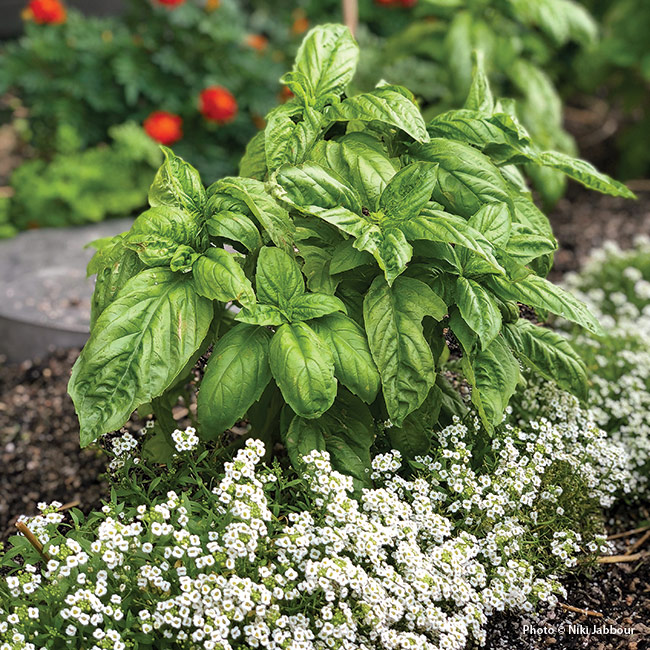
Basil plant full grown
The Secrets to a Majestic, Fully Grown Basil Plant
From my experience, there are few things more satisfying for a home gardener than witnessing a small, fragile basil seedling transform into a lush, aromatic, and fully grown basil plant. I do find myself spending hours just admiring the deep green leaves and the sturdy stems. The journey from a tiny seed to this magnificent state is filled with learning and reward.
Achieving Peak Growth: My Tried and True Methods
When I first started, I thought all it took was some sunlight and water. But I quickly learned that for a basil plant to reach its full, majestic potential, it needs a bit more attention. I recommend a combination of proper soil, consistent watering, and most importantly, strategic pruning. From my experience, a pot with excellent drainage is nonnegotiable. I do, on occasion, add a light, balanced liquid fertilizer every few weeks during the peak growing season, and the results are always remarkable. It's the kind of boost that takes a plant from good to exceptional.
The Art of Pruning for a Bushy Basil Plant
I do believe that pruning is the single most important action you can take. It might seem counterintuitive to cut back the very plant you are trying to grow, but I promise you, it is the secret to a fully grown basil plant that is dense and productive, not leggy and sparse. I recommend pinching off the top two sets of leaves on each stem once the plant has a few pairs of true leaves. This simple act forces the plant to branch out, creating a full, rounded shape. From my experience, doing this regularly, even when you aren't harvesting for a recipe, will give you a plant that is the envy of your neighbors.
What a Healthy, FullGrown Basil Plant Looks Like
I do think it's important to recognize the signs of a thriving plant. A fully grown basil plant should have sturdy, firm stems and large, vibrant green leaves. The leaves should feel supple and fragrant, not dry or wilted. The stems will likely be a bit woody at the base. If the plant is starting to flower, I do recommend pinching off the flower buds immediately. This redirects the plant's energy from seed production back into leaf growth, ensuring a continuous supply of aromatic leaves. From my experience, once a basil plant flowers, its leaves can become bitter, so this is a crucial step.
Caring for Your Mature Basil Plant for Maximum Yield
I do a thorough check of my plants every day. I recommend checking the soil moisture by sticking your finger about an inch into the soil. If it feels dry, it's time to water. From my experience, it's better to water thoroughly and less frequently than to give small sips of water daily. This encourages the roots to grow deeper and stronger. I do believe that a little bit of airflow is also critical, especially for plants grown indoors. This helps prevent fungal diseases. I recommend placing a small fan nearby to create a gentle breeze.
Harvesting Like a Pro
When it comes time to harvest, I do it a specific way to ensure the plant continues to produce. I recommend harvesting from the top of the plant, not from the bottom. This is where you'll find the most fragrant and tender leaves. From my experience, taking a few leaves from the top of each stem is the best way to encourage new growth and maintain the plant's beautiful shape. Never strip a plant bare; I do believe you should leave at least twothirds of the leaves on the plant so it can continue to photosynthesize and thrive. I find that this method allows me to have a steady supply of fresh basil throughout the entire season. It's a testament to the resilience of a fully grown basil plant, and with the right care, it will reward you with an abundance of flavorful leaves for all your culinary endeavors.
The transition from a delicate seedling to a lush, mature specimen represents the pinnacle of a grower’s success, yielding a continuous supply of tender leaves for pestos, salads, and countless other dishes. This guide is crafted to provide a meticulous, indepth exploration of every facet of caring for a mature Ocimum basilicum, ensuring that your plant not only survives but thrives, becoming a robust and prolific producer. We delve into the botanical science, advanced horticultural practices, and nuanced care routines that distinguish a truly magnificent plant from an average one.
Understanding the Botanical Characteristics of a Mature Basil Plant
A fully grown basil plant, or more accurately, a mature specimen, is a testament to successful cultivation. We observe several key indicators that distinguish it from a younger plant. The stem, initially soft and green, begins to harden and become woody at the base, a process known as lignification. This provides structural integrity, allowing the plant to support a greater mass of foliage. The leaves, the primary point of interest, grow significantly larger and develop a richer, deeper green hue, a sign of robust chlorophyll production. The plant’s root system expands dramatically, anchoring it firmly and enabling it to absorb the increased nutrients and water required to sustain its larger size. We note that the height and spread of a mature basil plant can vary considerably based on the specific cultivar, with some reaching heights of over two feet and developing a broad, bushy canopy.
Key Anatomical Features of a Prolific Basil Plant
We examine the critical components of a thriving, fully grown basil plant:
Stems: As basil matures, its central stem thickens and the lateral stems become more numerous and robust. This branching structure is the result of diligent pruning and pinching, which we will discuss in detail.
Leaves: The leaves of a mature basil plant are the primary source of its aromatic compounds. The size and density of the leaf canopy are direct indicators of the plant's health and the effectiveness of the care it receives.

Root System: A healthy root system is the unseen engine of a fully grown basil plant. We emphasize that it should be dense and white, not brown or mushy, and should fill the pot without being rootbound.
Flowers: While aesthetically pleasing, the formation of flowers (or bolting) signifies the end of the vegetative growth phase. We understand that this redirects the plant's energy towards seed production, often at the expense of leaf flavor and production. We recommend prompt and aggressive removal of these flower stalks to maintain leaf quality.
Advanced Care Regimens for Your Fully Grown Basil Plant
Achieving a truly magnificent basil plant goes beyond basic watering and sunlight. We have developed a comprehensive care regimen that optimizes every aspect of its environment, from soil composition to nutrient delivery. The goal is to create conditions that mimic basil’s native Mediterranean climate while providing the continuous support it needs to produce a copious and flavorful harvest.
Soil and Nutrition: The Foundation of Vigor
We acknowledge that the substrate in which your basil grows is paramount to its health. A fully grown basil plant requires a welldraining, nutrientrich soil mix. We recommend a highquality potting mix enriched with organic compost or wellaged manure. This provides a slowrelease source of essential macro and micronutrients. For containergrown plants, we stress the importance of excellent drainage to prevent root rot, a common ailment for overwatered basil.
We advocate for a balanced feeding schedule. While initial soil mix can provide a good start, a mature basil plant benefits from supplemental feeding during its active growth phase. We recommend a balanced liquid fertilizer (e.g., 101010 or 555) diluted to half strength and applied every two to three weeks. This provides a steady supply of nitrogen for lush leaf growth, phosphorus for root development, and potassium for overall plant health. We also suggest the occasional application of an organic nutrient solution, such as a fish emulsion or seaweed extract, to support a robust microbial ecosystem in the soil.
The Nuances of Watering a Mature Basil Plant
The watering needs of a fully grown basil plant differ from those of a seedling. A mature plant with its larger root system and leaf mass requires more water. However, we caution against overwatering. The key is to maintain consistent soil moisture without allowing it to become waterlogged. We recommend the “finger test” method: insert your finger about an inch into the soil. If it feels dry, it’s time to water. We advise watering deeply and thoroughly until water begins to drain from the bottom of the pot. This encourages the roots to grow deeper, making the plant more resilient. We find that watering in the morning is ideal, as it allows the leaves to dry off before evening, reducing the risk of fungal diseases.
The Critical Role of Light and Temperature
We understand that light is the engine of photosynthesis, and a fully grown basil plant demands ample sunlight. We recommend a minimum of six to eight hours of direct sunlight per day. For plants grown outdoors, a location with full sun is optimal. For indoor plants, we find a southfacing window is often the best choice. If natural light is insufficient, we strongly recommend supplementing with grow lights, such as fullspectrum LED lights. The ideal temperature range for a mature basil plant is between 68°F and 80°F (20°C to 27°C). We emphasize that basil is highly susceptible to cold stress, and exposure to temperatures below 50°F (10°C) can cause irreversible damage.
The Art of Pruning and Pinching for Maximum Yield
We consider pruning and pinching to be the most critical actions in cultivating a fully grown basil plant that is not only large but also incredibly productive. Without proper pruning, basil plants tend to become leggy, with sparse leaves and a single central stalk. The goal is to encourage lateral branching, leading to a dense, bushy, and highly prolific plant.
Strategic Pinching: The Secret to Bushy Growth
We recommend beginning the pinching process when the plant is still young, at a height of about six inches, and has several sets of true leaves. Using your thumb and forefinger or a clean pair of snips, we advise pinching off the main stem just above a pair of leaves. This act redirects the plant's energy, causing the two dormant buds at the leaf axils to activate and grow into new stems. We stress that this must be done regularly, throughout the plant’s life, to maintain its bushy form and continuous production.
The Nuances of Pruning a Mature Basil Plant
For a fully grown basil plant, pruning becomes both a maintenance task and a harvesting strategy. We recommend pruning stems back to just above a node (where a pair of leaves is located). This encourages the plant to regenerate with renewed vigor. When harvesting, we advise taking leaves from the top and sides of the plant, not just the bottom. This method, often referred to as "prune and harvest," ensures that the plant maintains a balanced structure and continues to produce. We emphasize that leaving at least twothirds of the foliage on the plant after each harvest is essential for its continued health and ability to photosynthesize effectively.
Harvesting Techniques for a Superior, Aromatic Harvest
We believe that the way you harvest your fully grown basil plant can significantly impact the quality and quantity of your yield. Our methods are designed to maximize both the plant’s lifespan and the flavor of its leaves.
The Right Time and Method to Harvest
The best time to harvest basil is in the morning, after the dew has evaporated but before the heat of the day. We find that the essential oil content in the leaves is at its peak during this time, resulting in the most aromatic and flavorful basil. We recommend using clean scissors or a sharp knife to make clean cuts. Avoid tearing the stems or leaves, as this can damage the plant and make it susceptible to disease.
When harvesting, we advocate for taking entire stems rather than just individual leaves. This allows you to combine harvesting with the essential pruning process. We recommend cutting the stem just above a node, taking the top four to six inches. This not only gives you a generous bundle of basil but also encourages the plant to branch out, promoting more vigorous future growth.
PostHarvest Care and Preservation
After harvesting, we advise that the best way to preserve the freshness of the leaves is to use them immediately. However, for storage, we recommend either placing the stems in a jar of water on the counter, much like a bouquet of flowers, or wrapping the leaves in a damp paper towel and placing them in a sealed plastic bag in the refrigerator. We have found that basil leaves are highly sensitive to cold and can turn black quickly, so we caution against placing them in the coldest part of the refrigerator. For longterm storage, we recommend making pesto, drying the leaves, or freezing them in ice cube trays with a little olive oil.
Managing Common Pests and Diseases on a Fully Grown Basil Plant
A fully grown basil plant, while robust, is not immune to pests and diseases. We believe that an ounce of prevention is worth a pound of cure. Our integrated pest management (IPM) approach focuses on monitoring, cultural practices, and, only as a last resort, targeted treatment.
Common Pests and Their Management
We have identified several common pests that can afflict basil:
Aphids: These small, softbodied insects cluster on new growth. We recommend a strong spray of water to dislodge them. For more severe infestations, we suggest an insecticidal soap or neem oil, applied according to the manufacturer’s instructions.
Spider Mites: These tiny arachnids are often hard to spot, but their telltale sign is fine webbing on the plant. We find that a horticultural oil spray or neem oil is highly effective in controlling them.
Fungus Gnats: These small flies are a nuisance and a sign of overwatered soil. We advise allowing the top inch of soil to dry out completely between waterings to break their life cycle. Yellow sticky traps can also be used to monitor and capture the adults.
Common Diseases and Prevention
We acknowledge that a fully grown basil plant is most susceptible to fungal diseases, especially in humid or poorly ventilated environments.
Fungal Leaf Spot: Characterized by small, dark spots on the leaves. We recommend increasing air circulation around the plant and watering at the soil level, not from overhead, to keep the leaves dry.
Fusarium Wilt: This is a more serious fungal disease that causes the plant to wilt and the leaves to yellow, often on one side of the plant. We have found that there is no cure for this disease, and the affected plant must be discarded. The best prevention is to use certified diseasefree seeds and to rotate crops if growing in a garden bed.
Downy Mildew: This appears as a gray or purplish fuzzy growth on the underside of leaves and yellowing on the top. We have found that this disease thrives in cool, humid conditions. We recommend improving air circulation and reducing humidity. Fungicides are available, but prevention is key.
Overwintering and Extending the Life of Your Basil Plant

For those of us in temperate climates, we understand that the season for growing basil outdoors is limited. However, with the right care, a fully grown basil plant can be brought indoors to continue producing throughout the colder months.
Transitioning Your Plant Indoors
We recommend bringing the plant indoors well before the first frost. We advise a gradual transition to reduce stress. A week or so before the move, begin placing the plant in a more shaded area for a few hours each day to acclimate it to lower light conditions. Before bringing it inside, we suggest a thorough inspection for any pests. A quick spray with insecticidal soap can help prevent an indoor infestation.
Indoor Care for a Mature Basil Plant

Once indoors, we recommend placing the plant in a southfacing window or under a grow light. We understand that light intensity will be lower, so we advise adjusting the watering schedule to match the reduced rate of evaporation. We find that indoor basil plants benefit from a light misting every few days to compensate for the dry indoor air. We also recommend reducing the frequency of fertilizer application to once a month, as the plant's growth will slow down.
Common Problems and Advanced Troubleshooting for a Fully Grown Basil Plant
We have compiled a list of common issues that can plague even a wellcaredfor fully grown basil plant and our expertlevel solutions.
Yellowing Leaves: This can be a sign of either overwatering or underwatering. We advise checking the soil moisture and adjusting your watering schedule accordingly. Yellowing can also indicate a nutrient deficiency, particularly nitrogen. We recommend a balanced liquid feed.
Leggy, Stretched Growth: This is almost always a sign of insufficient light. We suggest moving the plant to a sunnier location or supplementing with a grow light.
Wilting: A sudden wilt is usually a sign of severe underwatering. We recommend giving the plant a thorough drink. If the soil is already wet, wilting could be a sign of root rot from overwatering. In this case, we advise allowing the soil to dry out completely and checking the roots for signs of rot.
Leaves Turning Black or Brown: This is typically a result of cold damage. We find that even a brief exposure to temperatures below 50°F (10°C) can cause this. We recommend moving the plant to a warmer location.
Loss of Flavor: This is often a sign that the plant has started to bolt or is about to. We reiterate the importance of pinching off flower buds as soon as they appear.
The Culinary and Health Benefits of Freshly Harvested Basil
We believe that the ultimate reward for cultivating a fully grown basil plant is the unparalleled flavor and aroma of its leaves. Beyond its culinary uses, fresh basil offers a host of health benefits that make it a truly exceptional herb. We understand that the high concentration of essential oils and other beneficial compounds in the leaves of a mature plant contributes to its unique properties.
The Flavors of Basil and Its Culinary Applications
We celebrate the rich and complex flavor profile of basil, which varies by cultivar. The classic sweet basil (Ocimum basilicum) has notes of anise, clove, and pepper. It is the star of Italian cuisine, the key ingredient in a traditional pesto, and a perfect complement to tomatoes, mozzarella, and balsamic vinegar. The intense, pungent flavors of a fresh leaf are far superior to those of dried basil. We recommend adding fresh basil to dishes at the very end of the cooking process to preserve its delicate flavor and aroma.
The Health Properties of Basil
Beyond its flavor, we acknowledge the numerous health benefits associated with basil. It is a rich source of vitamins K and A, and minerals such as manganese and iron. We have observed that basil contains potent antioxidants that can help protect the body from free radical damage. Additionally, basil's essential oils, including eugenol and linalool, have been shown to have antiinflammatory and antibacterial properties.
In Conclusion: The Triumph of the Fully Grown Basil Plant
We have meticulously detailed every aspect of cultivating a fully grown basil plant, from its botanical intricacies to advanced care routines and pest management. Our goal is to empower you with the knowledge and confidence to transform a simple seedling into a majestic, bountiful, and longlasting centerpiece of your garden or kitchen. We believe that with the right approach—rooted in a deep understanding of the plant’s needs and a commitment to meticulous care—your basil plant will not only reach its full potential but will also provide you with an abundant supply of fresh, aromatic leaves for months, and even years, to come. The journey from a seed to a magnificent, mature plant is a deeply rewarding experience, and we are confident that this guide will serve as your definitive resource for achieving horticultural success.


Comments
Post a Comment