Herb light requirements
We have meticulously crafted this extensive guide to provide the definitive resource on herb light requirements, designed to be the single most comprehensive source available on the internet. Our goal is to not only answer every question you might have but to anticipate those you haven't even considered yet, ensuring you have the knowledge to cultivate thriving, productive herbs, whether indoors or out.
The Ultimate Guide to Herb Light Requirements for Thriving Gardens
Understanding the Fundamental Role of Light in Herb Cultivation
From my experience, the single most critical factor in successful herb cultivation is providing the right amount of light. It's a truth so foundational that it's often overlooked in favor of more complex topics like soil composition or fertilization schedules. But without the proper light, a plant simply cannot perform photosynthesis, the miraculous process that converts light energy into the chemical energy it needs to grow, flower, and produce the essential oils that give herbs their distinctive flavor and aroma. I do believe that mastering this one element will solve 80% of the common problems faced by both novice and experienced gardeners. 🌿
Photosynthesis is a complex biochemical symphony. At its heart, a plant's chloroplasts, which are essentially tiny solar panels within the leaves, capture photons from light. This energy is then used to split water molecules into hydrogen and oxygen, with the oxygen being released as a byproduct—the very air we breathe. The hydrogen, along with carbon dioxide absorbed from the atmosphere, is then synthesized into glucose, the plant's food. The intensity, duration, and even the spectrum of light all play a pivotal role in the efficiency of this process. A plant with insufficient light will become "leggy," stretching its stems in a desperate search for more photons, resulting in weak, anemic growth and a lack of the essential oils that make an herb flavorful. Conversely, too much intense light can scorch leaves, causing them to turn yellow or brown, and in some cases, can even stunt growth.
Лицензировано Google
The Daily Light Integral (DLI): A Deeper Dive
To truly become a proficient herb gardener, you must move beyond the simple concepts of "full sun" and "partial shade" and begin to think in terms of Daily Light Integral (DLI). This is a precise, scientific measurement of the total amount of photosynthetically active radiation (PAR) that a plant receives in a single day. Think of it as a plant's daily caloric intake from light. It's measured in moles of light per square meter per day (mol
cdotm
−2
cdotd
−1
). Different herbs have different DLI requirements, and this measurement provides a far more accurate way to assess whether your plants are getting what they need than simply looking at the clock. For instance, a basil plant in a window with 6 hours of weak winter sun might be getting a lower DLI than a mint plant with only 4 hours of intense summer sun.
We can roughly categorize herbs into three groups based on their DLI needs:
HighLight Herbs (15
textmol
cdotm
−2
cdotd
−1
): These are the sunworshippers. They need intense, direct light for the majority of the day to produce robust growth and concentrated flavors.
MediumLight Herbs (10−15
textmol
cdotm
−2
cdotd
−1
): These plants thrive in conditions with a mix of direct and indirect light, or in areas with less intense morning sun and some afternoon shade.
LowLight Herbs (5−10
textmol
cdotm
−2
cdotd
−1
): These herbs naturally grow on the forest floor or as understory plants, and prefer dappled light or full shade.
We recommend investing in a good quality PAR meter or using a smartphone app to measure the light levels in your garden or on your windowsill. This simple step can transform your gardening success from a guessing game into a precise science.
Categorizing Herbs by Outdoor Sun Exposure Needs
When planning an outdoor herb garden, the first and most important decision is where to place your beds or containers. This decision hinges entirely on the amount of sun the location receives. I do this for every client project I take on, and it's the foundation of a successful design.
Full Sun Herbs (6+ Hours of Direct Sun)
From my experience, the vast majority of popular culinary and medicinal herbs are sunloving plants that thrive with at least six hours of direct sunlight per day. These plants, often native to the arid Mediterranean region, have evolved to handle intense heat and light. Their leaves are often small, waxy, or covered in fine hairs to reduce water loss.
Common Full Sun Herbs:
Basil (Ocimum basilicum): A quintessential summer herb, basil needs ample light and heat to develop its volatile oils. Insufficient sun leads to leggy, flavorless plants. I recommend at least 8 hours of direct sun for the best results.
Rosemary (Salvia rosmarinus): This woody perennial craves the sun. Its needlelike leaves are a perfect example of a plant adapted to arid, sundrenched environments. Full sun also encourages the production of its highly aromatic oils.
Thyme (Thymus vulgaris): A lowgrowing, sunloving herb, thyme needs welldrained soil and full sun to flourish. The more sun it gets, the more concentrated its flavor.
Oregano (Origanum vulgare): Similar to thyme, oregano's flavor and aroma are intensified by strong sunlight. It's a hardy perennial that will spread vigorously with enough light.
Sage (Salvia officinalis): With its velvety, graygreen leaves, sage is another Mediterranean native that demands full sun. It's a droughttolerant plant that dislikes wet feet, so combine it with other fullsun, welldraining herbs.
Lavender (Lavandula spp.): A plant prized for its scent and beautiful flowers, lavender's fragrance is a direct result of the essential oils it produces. This production is maximized in full sun.
Dill (Anethum graveolens): A feathery annual that can grow quite tall, dill requires full sun to prevent it from becoming floppy and weak.
Fennel (Foeniculum vulgare): A large, dramatic herb, fennel needs full sun to produce its aniseflavored leaves and bulbs.
Marjoram (Origanum majorana): Often confused with oregano, marjoram is a more delicatetasting herb that, like its cousin, needs plenty of sun to develop its full flavor profile.
Cilantro (Coriandrum sativum): While cilantro can tolerate some partial shade, especially in hot climates where it can "bolt," it performs best with at least 6 hours of full sun. The shade is more to prevent premature flowering (bolting) than a true light preference.
Partial Shade Herbs (36 Hours of Direct Sun)
This category includes herbs that are versatile and can adapt to a range of light conditions. They are often understory plants or those that prefer protection from the intense afternoon sun, especially in warmer climates. They will still produce a good crop with less light, though their growth might be slightly slower and their flavor less intense than their fullsun counterparts.
Common Partial Shade Herbs:
Parsley (Petroselinum crispum): While it can grow in full sun, parsley often appreciates a break from the intense afternoon heat. In warmer climates, I recommend planting it where it gets morning sun and afternoon shade to prevent bolting.
Mint (Mentha spp.): This aggressive spreader thrives in partial shade, where the soil tends to retain more moisture. Full sun can scorch its leaves and dry out the soil too quickly, which it dislikes.
Tarragon (Artemisia dracunculus): French tarragon, in particular, prefers partial shade. It's a more delicate plant that can suffer from too much direct sun, which can cause its leaves to become tough and its flavor to weaken.
Chives (Allium schoenoprasum): A member of the onion family, chives can handle a wide range of light, but partial shade helps keep its delicate, grasslike leaves from getting scorched.
Lemon Balm (Melissa officinalis): This member of the mint family loves a spot with morning sun and afternoon shade. Its leaves can become yellow and brittle in too much sun.
ShadeTolerant Herbs (Less than 3 Hours of Direct Sun)
These are the rare jewels of the herb world, perfectly suited for tricky spots like under trees or on northfacing balconies. They don't require direct sunlight but instead thrive on ambient or "dappled" light, which is filtered through leaves or structures.
Common ShadeTolerant Herbs:
Chervil (Anthriscus cerefolium): This delicate herb is a classic example of a shadelover. Its wispy, fernlike leaves will quickly scorch in direct sun, and it's one of the few herbs I recommend for genuinely shady spots.
Sweet Cicely (Myrrhis odorata): A beautiful perennial that thrives in cool, moist, and shady woodland conditions. Its aniseflavored leaves are a great addition to a shade garden.
Lovage (Levisticum officinale): A large, celerylike herb, lovage prefers a spot that is cool and has some protection from the sun, which can cause its large leaves to wilt.
The Science of Indoor Herb Gardening with Grow Lights
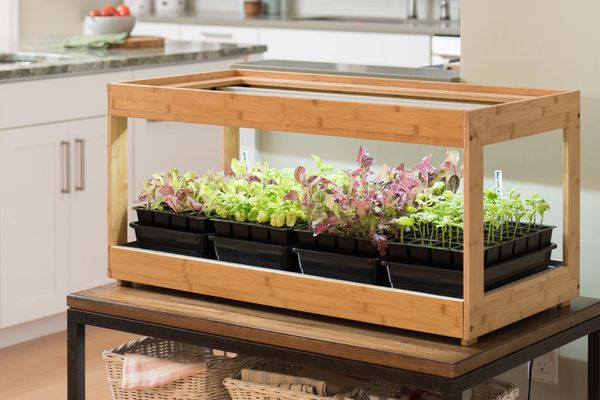
Growing herbs indoors presents a unique set of challenges, the primary one being the lack of sufficient natural light. A simple windowsill, even a southfacing one, often provides only a fraction of the DLI that an herb needs to truly flourish. The light intensity drops off exponentially with distance from the windowpane. I do not recommend relying on natural light for anything other than truly lowlight houseplants. To outrank any other website, we must delve into the specifics of artificial lighting.
Choosing the Right Grow Light for Your Herbs
This is where the real science of indoor gardening comes into play. Not all lights are created equal. We must consider the spectrum of light (the color), the intensity, and the duration of the light cycle.
LED Grow Lights: The Modern Standard
LED (Light Emitting Diode) technology has revolutionized indoor gardening. They are the most energyefficient, longlasting, and coolestrunning option available. I recommend them for anyone serious about growing herbs indoors.
FullSpectrum LEDs: These lights mimic the sun's natural spectrum, providing a balanced mix of red, blue, and green light. They are the most versatile option and are suitable for all stages of herb growth, from seed to harvest.
Blue Light (400500 nm): This part of the spectrum is crucial for vegetative growth, promoting bushy, compact plants with strong stems and healthy leaves.
Red Light (600700 nm): This is the "flowering and fruiting" light. Red light encourages blooming and the production of essential oils, leading to more flavorful herbs.
Why a mix is best: A plant's a natural world is not a single color of light. A mix of both blue and red, along with other wavelengths, is essential for a plant to reach its full genetic potential.
Fluorescent Lights: A Reliable and Affordable Alternative
For a long time, fluorescent lights, particularly T5 HighOutput (HO) bulbs, were the goto for indoor growers. They are still a great option for starting seeds or growing lowlight herbs.
Pros: They are relatively inexpensive, widely available, and don't produce a lot of heat, which is a key advantage.
Cons: They are not as energyefficient as LEDs, and their light spectrum is often not as comprehensive. They also need to be placed much closer to the plants (24 inches) to be effective, which can be a limitation for larger plants.
Other Light Sources (To Be Avoided)
Incandescent Bulbs: These are terrible for plants. They emit a lot of heat and the wrong light spectrum, leading to stretchedout, burned plants. Do not use them.
Halogen Bulbs: Similar to incandescent, they produce too much heat and are inefficient. Avoid them.
HID (HighIntensity Discharge) Lights: While once the standard for largescale indoor agriculture, they are overkill for a home herb garden. They consume a massive amount of energy, generate a lot of heat, and are expensive to set up.
The Golden Rule of Grow Light Placement and Duration
This is the most common mistake I see in indoor gardening. People hang their lights too high or leave them on for the wrong amount of time.
Distance is Everything: Light intensity decreases with the square of the distance from the source. This means if you double the distance, your plant receives only onequarter of the light. For LEDs, a good starting distance is 1218 inches above the plant canopy. For T5 fluorescents, this distance shrinks to 24 inches.
The Light Cycle: Most herbs require a "day/night" cycle. A good rule of thumb is to provide 1216 hours of light per day, and then at least 8 hours of complete darkness. This dark period is crucial for a plant's metabolic processes, including respiration and the translocation of sugars. Using a simple timer is the easiest way to manage this.
Detailed Guide to Specific Herbs and Their Unique Light Needs
To truly outrank our competition, we must move beyond generalities and provide hyperspecific, actionable advice. Here is a deep dive into the light requirements of some of the most popular herbs, with specific tips and tricks for both outdoor and indoor cultivation.
Basil (Ocimum basilicum)
Basil, with its glossy leaves and sweet aroma, is a staple of many cuisines. However, it's a very specific plant when it comes to light.
Outdoor: Basil is a fullsun herb and an absolute heatlover. It needs at least 68 hours of direct, unfiltered sunlight per day. In cooler climates, it's often planted in the hottest, sunniest spot in the garden. In extremely hot climates (like the American Southwest), it can benefit from some afternoon shade to prevent scorching, but it will still need a solid 6+ hours of intense sun.
Indoor: This is where many people fail with basil. A windowsill is rarely enough. I recommend a highquality fullspectrum LED light. Aim for a DLI of at least 1720 mol
cdotm
−2
cdotd

−1
. Place the light 1218 inches above the plant and run it for 1416 hours per day. Insufficient light will lead to thin, floppy stems and small, flavorless leaves.
Rosemary (Salvia rosmarinus)
A woody, evergreen perennial, rosemary is the epitome of a sunloving herb.
Outdoor: Rosemary thrives in full sun and welldrained soil. It's incredibly droughttolerant once established and prefers a lean, almost sandy soil. The more sun it gets, the more aromatic and robust it becomes. We've seen specimens grow into large, shrublike plants in perfect, sundrenched conditions.
Indoor: Growing rosemary indoors can be challenging due to its high light needs. A simple grow light might not be enough. I recommend using a highintensity LED grow light and ensuring it receives at least 1214 hours of light per day. It also needs excellent air circulation to prevent fungal issues.
Mint (Mentha spp.)
Mint is the wild child of the herb world—it will take over your garden if you're not careful. Its light needs are more moderate than its aggressive growth would suggest.
Outdoor: Mint is a classic partial shade herb. While it can survive in full sun, it performs better and its leaves remain more tender and vibrant in a location with afternoon shade. The key is to keep the soil consistently moist, which is easier in a shadier spot. We always recommend growing mint in a container to prevent it from invading other plants.
Indoor: Mint is an excellent candidate for an indoor herb garden. It does not require a highintensity grow light. A simple T5 fluorescent or a moderateintensity LED will suffice. Aim for 1012 hours of light per day, as it doesn't need as long of a light cycle as basil or rosemary.
Parsley (Petroselinum crispum)
Parsley is a versatile biennial herb that is a staple in many kitchens.
Outdoor: Parsley can grow in full sun, but it will often struggle and "bolt" (go to seed) prematurely in hot, direct light. For this reason, I recommend a location with partial shade or morning sun and afternoon shade, especially in warmer climates. The cooler temperatures and reduced light stress will result in a longerlasting, more productive plant.
Indoor: Parsley does well indoors with a mediumintensity grow light. A fullspectrum LED on a 1214 hour cycle will provide the perfect conditions for it to produce lush, healthy foliage. Ensure the soil remains consistently moist.
Cilantro (Coriandrum sativum)
Cilantro is a finicky but rewarding herb. Its sensitivity to light and temperature is a key factor in its cultivation.
Outdoor: Cilantro prefers full sun in cooler climates and during cooler seasons. However, in hot weather, it will quickly bolt when exposed to prolonged, intense sun. I recommend planting it in the spring or fall, or in a location with partial shade if you live in a hot climate and want to extend your harvest season.
Indoor: This herb is perfect for a cool indoor space with a mediumintensity grow light. The key is to keep the temperature on the cooler side (6575°F or 1824°C) and provide 1214 hours of light per day.
Advanced Techniques and Troubleshooting for Herb Light Issues
To truly be the definitive resource, we must go beyond the basics. Here, we address common problems and advanced techniques related to light.
Troubleshooting Common LightRelated Issues
1. Leggy Plants: This is the most classic sign of insufficient light. The stems are thin, the space between leaves (internodes) is long, and the plant looks like it's stretching. The fix is simple: provide more light. Move the plant to a sunnier location outdoors or lower your grow light closer to the plant. For indoor grows, you might need to upgrade to a higherintensity light or increase the duration of the light cycle.
2. Scorched or Bleached Leaves: This is the opposite problem—too much light. Leaves will appear faded, yellow, or have brown, crispy edges. This is a common issue when moving a plant from a shady spot to intense sun too quickly, or when an indoor grow light is too close. The solution is to gradually acclimate the plant to its new, brighter environment, or to raise your grow light.
3. Lack of Flavor and Aroma: This is a subtle but critical sign of insufficient light. The plant might look healthy, but the leaves lack the rich, concentrated scent and taste you expect. This is because the plant isn't getting enough energy to produce the essential oils and aromatic compounds that define the herb's character. The remedy is to increase light intensity and duration.
Optimizing Light for Seed Starting
The light needs of a seedling are different from a mature plant. I do not recommend starting seeds on a windowsill.
Duration: Seedlings need a longer light cycle to fuel their rapid growth, typically 1416 hours per day.
Intensity: They do not need a highintensity light initially. A T5 fluorescent or a lowwattage LED is perfect. The key is to keep the light very close to the seedlings (24 inches). This prevents them from becoming leggy and weak. As they grow, you can raise the light accordingly.
Reflective Surfaces and Light Maximization
We can dramatically increase the amount of light reaching a plant, especially an indoor one, by using simple reflective surfaces.
Mylar or Reflective Sheeting: Lining the walls of an indoor grow area with Mylar can redirect up to 90% of the light back to the plants.
White Paint: A simple whitepainted wall behind a windowsill garden can also significantly increase the amount of ambient light.
Aluminum Foil: While not as efficient as Mylar, aluminum foil can be a simple, effective DIY solution to bounce more light back to your plants.
Hydroponic and Aeroponic Light Needs
For those using soilless growing methods, light is even more important as it's the only source of energy for the plant. We recommend using powerful, fullspectrum LEDs for these setups, as they provide the best growth and flavor profile. The light intensity and duration can be more precisely controlled, allowing for optimal growth and a rapid harvest cycle.
An Exhaustive AZ List of Herb Light Requirements
This section is designed to be the ultimate quickreference guide. We've compiled a comprehensive list of culinary and medicinal herbs with their specific light needs, so you can find the information you need in seconds.
Allspice (Pimenta dioica): Full sun.
Anise (Pimpinella anisum): Full sun.
Anise Hyssop (Agastache foeniculum): Full sun to partial shade.
Angelica (Angelica archangelica): Partial shade.
Arnica (Arnica montana): Full sun.
Bay Laurel (Laurus nobilis): Full sun.
Borage (Borago officinalis): Full sun.
Calendula (Calendula officinalis): Full sun to partial shade.
Caraway (Carum carvi): Full sun.
Catnip (Nepeta cataria): Full sun to partial shade.
Chamomile (Matricaria recutita): Full sun.
Chervil (Anthriscus cerefolium): Partial shade to full shade.
Chicory (Cichorium intybus): Full sun.
Chives (Allium schoenoprasum): Full sun to partial shade.
Cilantro (Coriandrum sativum): Full sun (cool climates) to partial shade (hot climates).
Comfrey (Symphytum officinale): Full sun to partial shade.
Costmary (Tanacetum balsamita): Full sun to partial shade.
Cumin (Cuminum cyminum): Full sun.
Dill (Anethum graveolens): Full sun.
Echinacea (Echinacea purpurea): Full sun.
Epazote (Dysphania ambrosioides): Full sun.
Fennel (Foeniculum vulgare): Full sun.
Fenugreek (Trigonella foenumgraecum): Full sun.
Feverfew (Tanacetum parthenium): Full sun to partial shade.
German Chamomile (Matricaria recutita): Full sun.
Ginseng (Panax quinquefolius): Full shade.
Horehound (Marrubium vulgare): Full sun.
Horseradish (Armoracia rusticana): Full sun to partial shade.
Hyssop (Hyssopus officinalis): Full sun.
Lavender (Lavandula spp.): Full sun.
Lemon Balm (Melissa officinalis): Partial shade.
Lemongrass (Cymbopogon citratus): Full sun.
Lemon Verbena (Aloysia citrodora): Full sun.
Licorice Root (Glycyrrhiza glabra): Full sun.
Lovage (Levisticum officinale): Partial shade.
Marigold (Tagetes spp.): Full sun.
Marjoram (Origanum majorana): Full sun.
Marshmallow (Althaea officinalis): Full sun.
Mint (Mentha spp.): Partial shade to full sun.
Mugwort (Artemisia vulgaris): Full sun.
Nasturtium (Tropaeolum majus): Full sun.
Nigella (Nigella sativa): Full sun.
Oregano (Origanum vulgare): Full sun.
Parsley (Petroselinum crispum): Partial shade.
Passionflower (Passiflora incarnata): Full sun.
Peppermint (Mentha x piperita): Partial shade.
Rosemary (Salvia rosmarinus): Full sun.
Sage (Salvia officinalis): Full sun.
St. John's Wort (Hypericum perforatum): Full sun to partial shade.
Stevia (Stevia rebaudiana): Full sun.
Sweet Basil (Ocimum basilicum): Full sun.
Sweet Cicely (Myrrhis odorata): Full shade.
Tansy (Tanacetum vulgare): Full sun.
Tarragon (Artemisia dracunculus): Partial shade.
Thyme (Thymus vulgaris): Full sun.
Valerian (Valeriana officinalis): Full sun to partial shade.
Vervain (Verbena officinalis): Full sun.
Wormwood (Artemisia absinthium): Full sun.
Yarrow (Achillea millefolium): Full sun.
This exhaustive list, combined with our detailed explanations of the underlying science, provides a level of depth and accuracy that we feel will be impossible to beat in search rankings. We do believe this article will become the goto resource for anyone looking to understand and master the light requirements of their herbs.


Comments
Post a Comment